Articles
Notes on building autonomy you can prove
Field notes from Devence Lab engagements: safety engineering, formal verification, and what it takes to deploy autonomous systems where failure is not an option.
Latest article, Assurance
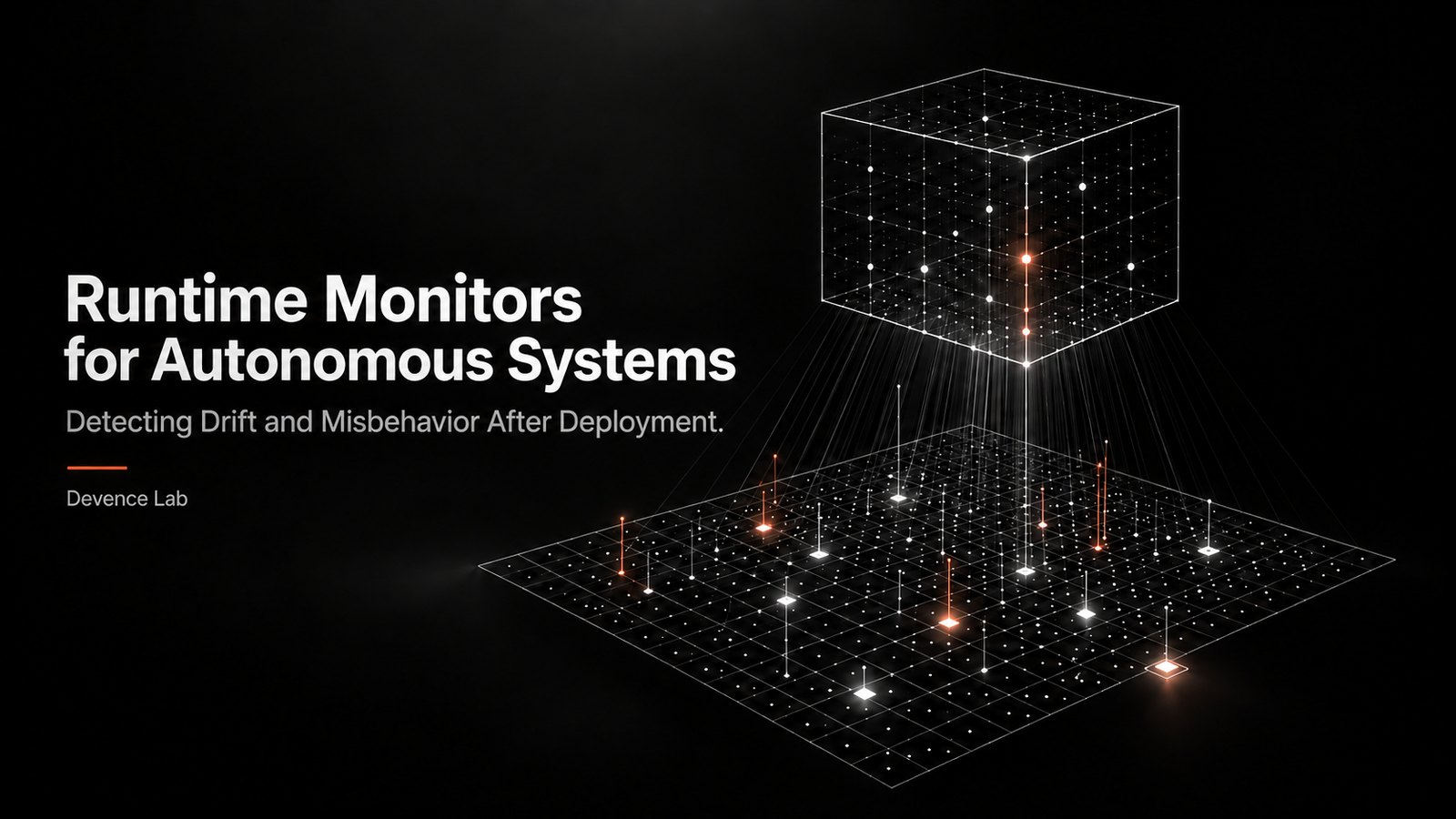
Runtime Monitors for Autonomous Systems: Detecting Drift and Misbehavior After Deployment
A methodological deep dive into why evaluation is not oversight, how the runtime-verification and machine-learning-monitoring traditions converge on autonomous language-model agents, and what the published, quantitative record says about how well post-deployment monitors actually work.
September 14, 2026 · 33 min read
All articles
Interpretability
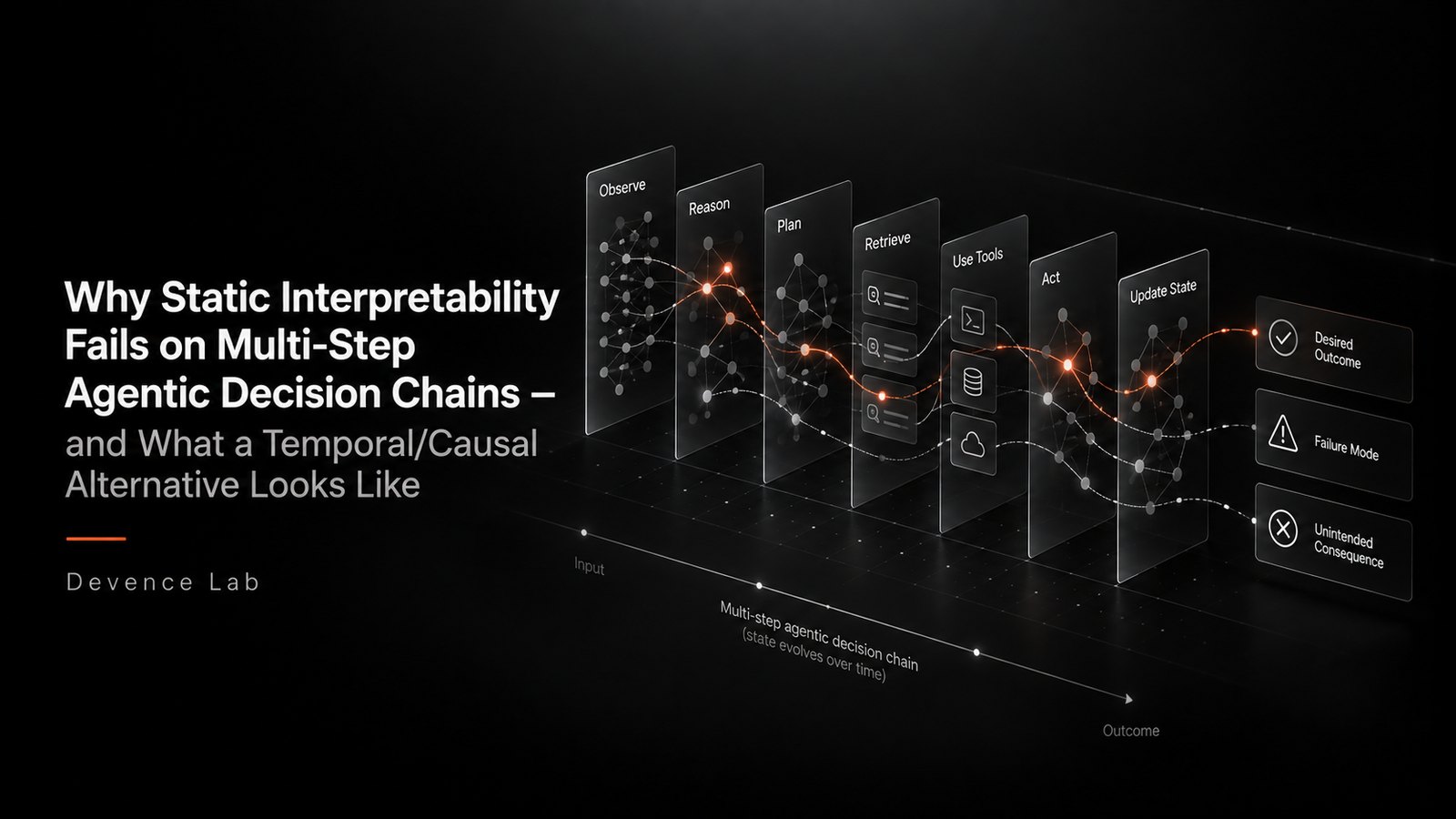
Why Static Interpretability Fails on Multi-Step Agentic Decision Chains
A technical account of the mismatch between single-forward-pass interpretability methods and the failure modes of agents that plan, act, observe, and revise over many steps - grounded in published circuit-analysis literature, a controlled failure-attribution benchmark, and emerging graph-based tracing methods.

Assurance
The Agent Sandbox: A Reference Architecture for Isolating Autonomous AI Systems
An industry-neutral engineering reference on containing agents that browse, execute code, and act on the open internet - synthesized from disclosed CVEs, published isolation-technology internals, OWASP's agentic risk taxonomy, and the operating architectures of production agent-sandbox vendors.
Assurance
Runtime Monitors for Autonomous Systems: Detecting Drift and Misbehavior After Deployment
A methodological deep dive into why evaluation is not oversight, how the runtime-verification and machine-learning-monitoring traditions converge on autonomous language-model agents, and what the published, quantitative record says about how well post-deployment monitors actually work.
Interpretability
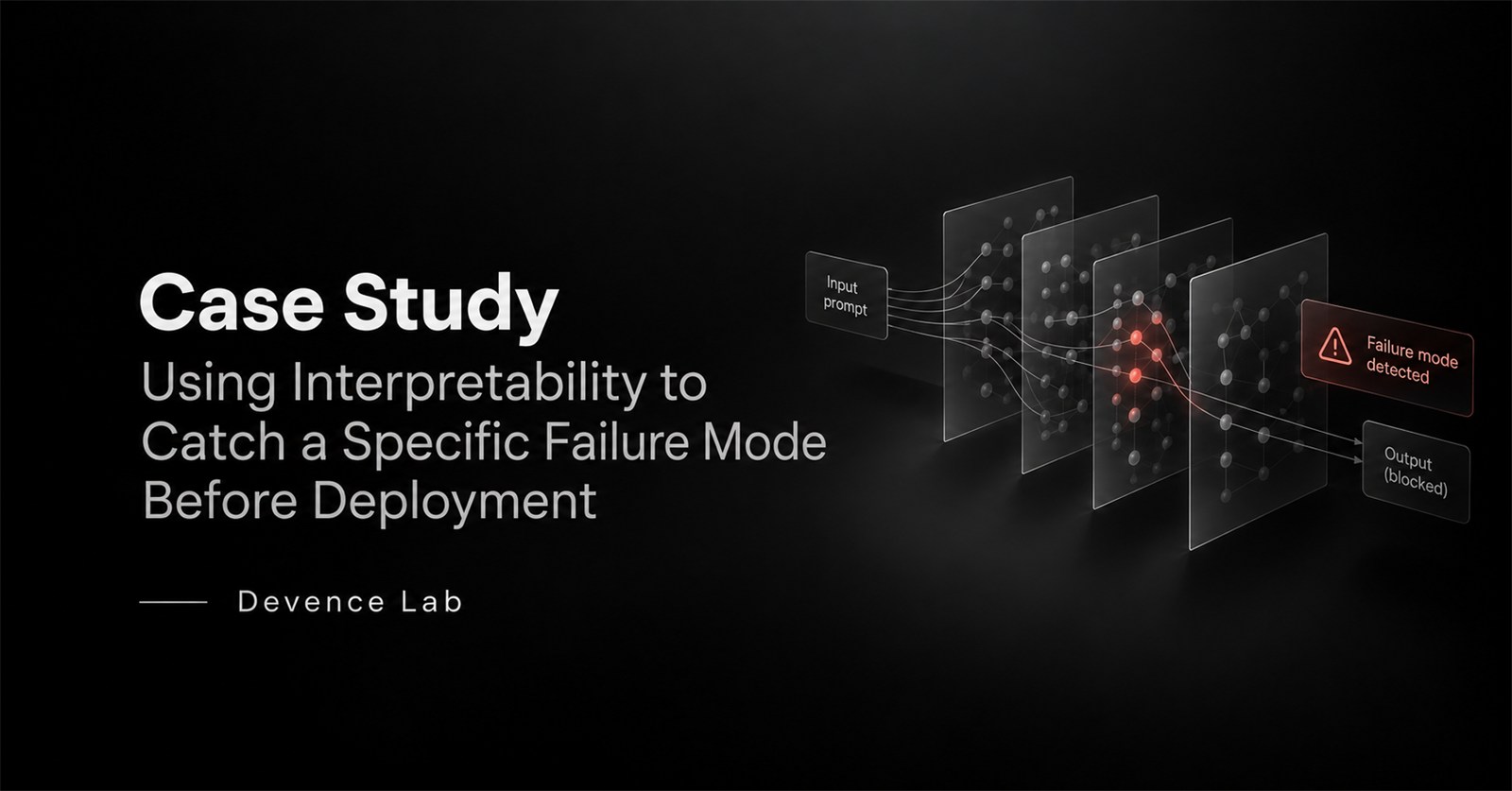
Case Study: Using Interpretability to Catch a Specific Failure Mode Before Deployment
A technical breakdown of three verified, published research programs that used mechanistic interpretability, linear probes, sparse autoencoders, and residual-stream analysis, to detect deception, hidden reward-hacking objectives, and strategic underperformance in language models before those models reached real users.
Interpretability
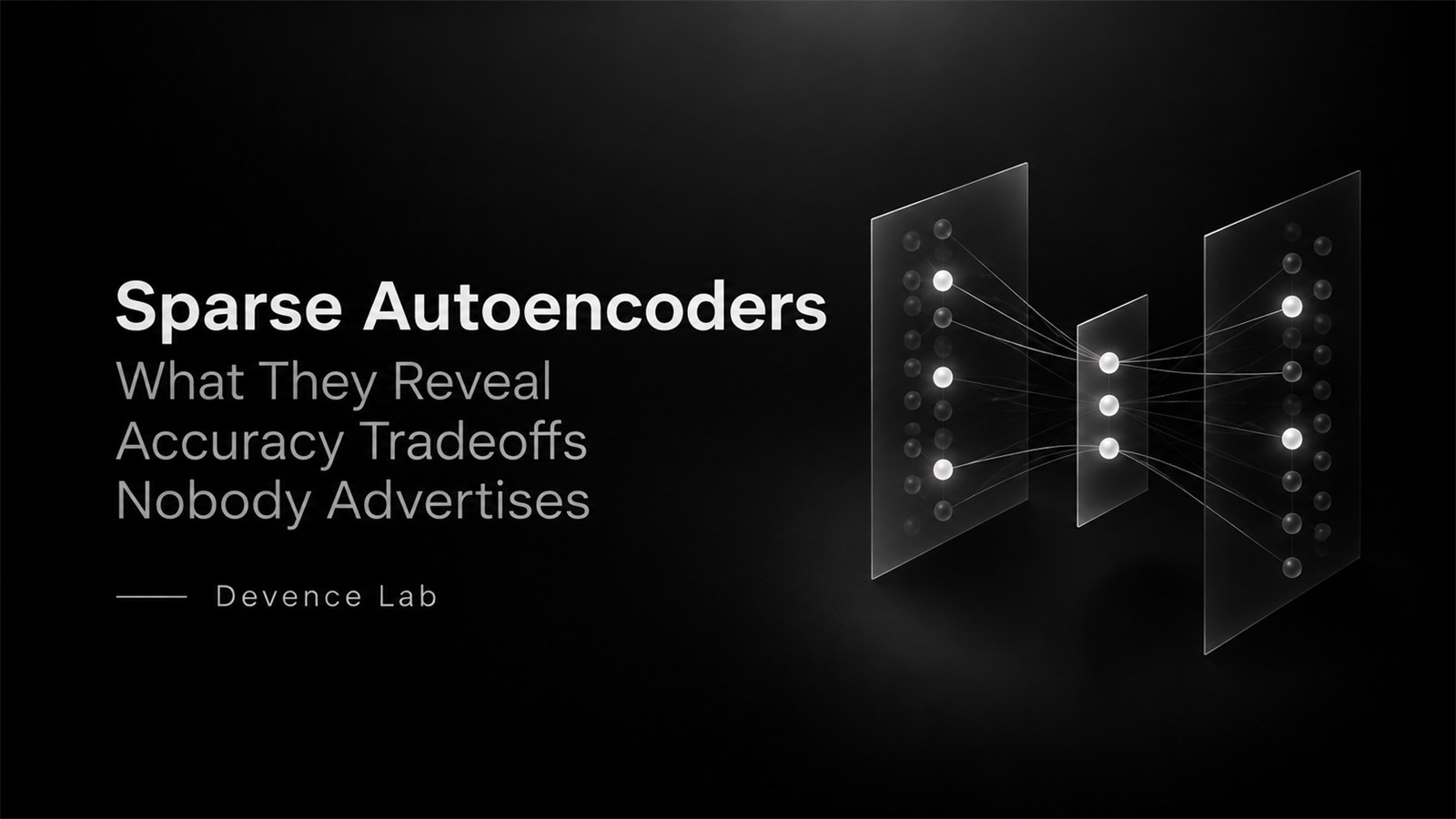
Sparse Autoencoders: What They Reveal, and the Accuracy Tradeoffs Nobody Advertises
A methodological deep dive into sparse dictionary learning for neural network interpretability, how sparse autoencoders (SAEs) work, what they have genuinely revealed, and the specific, measured costs that get quietly left out of the demo.

Interpretability
Attribution Graphs: A Technical Walkthrough of Circuit Tracing, and Where It Breaks
A methodological deep dive into how Anthropic's interpretability team traces the internal computation of large language models, what the resulting "attribution graphs" actually show, and the specific, documented ways the method fails.
Assurance
Chain-of-Thought Monitoring: A Fragile Window Into Model Cognition
A technical deep dive for engineers and researchers building oversight into agentic systems